Safari Stories

Dominic Maatany Safaris

Safari Stories

A lion on film, then wildebeest, jackal, and chameleon—names, habits, and the light that found them

Field notes

Small stories from the bush

A roar on film, then four still moments—each species with its own grammar of movement, light, and survival on East African savannah.

Lion

Panthera leo

Africa’s most social cat: females stay with pride sisters for life, cubs grow up together, and males announce territory with roars that carry for miles across open savannah. Hearing that sound at dusk—whether you see the animal or not—reminds you the bush is still running on its own rules.
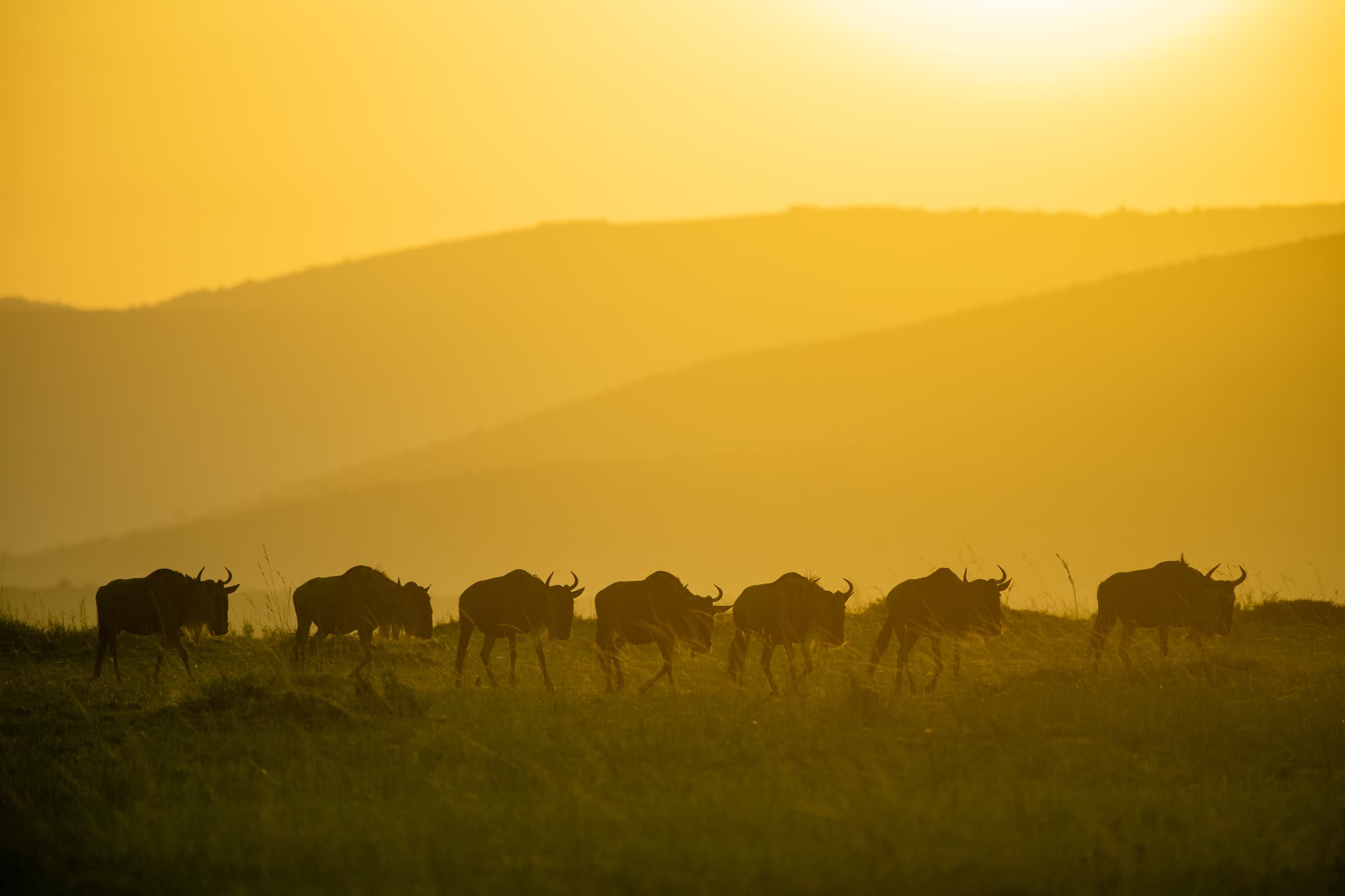
Blue wildebeest walking in line across golden savannah at sunrise or sunset

The engine of the Great Migration

Blue wildebeest

Connochaetes taurinus

They are not glamorous on a checklist, yet the plains would feel empty without them. Wildebeest move in ribbons and rivers of bodies, following grass and rain in a loop between Tanzania’s Serengeti and Kenya’s Masai Mara.

This frame is migration in miniature: one file of animals, each silhouette the same recipe—heavy forequarters, rocking gait, horns catching the last or first light. Nothing here is random; it is appetite, memory, and the pull of greener ground.

  • Well over a million animals can take part in the larger Serengeti–Mara migration system.
  • Calving on the southern Serengeti plains often peaks in a short window, drawing predators into incredible concentration.
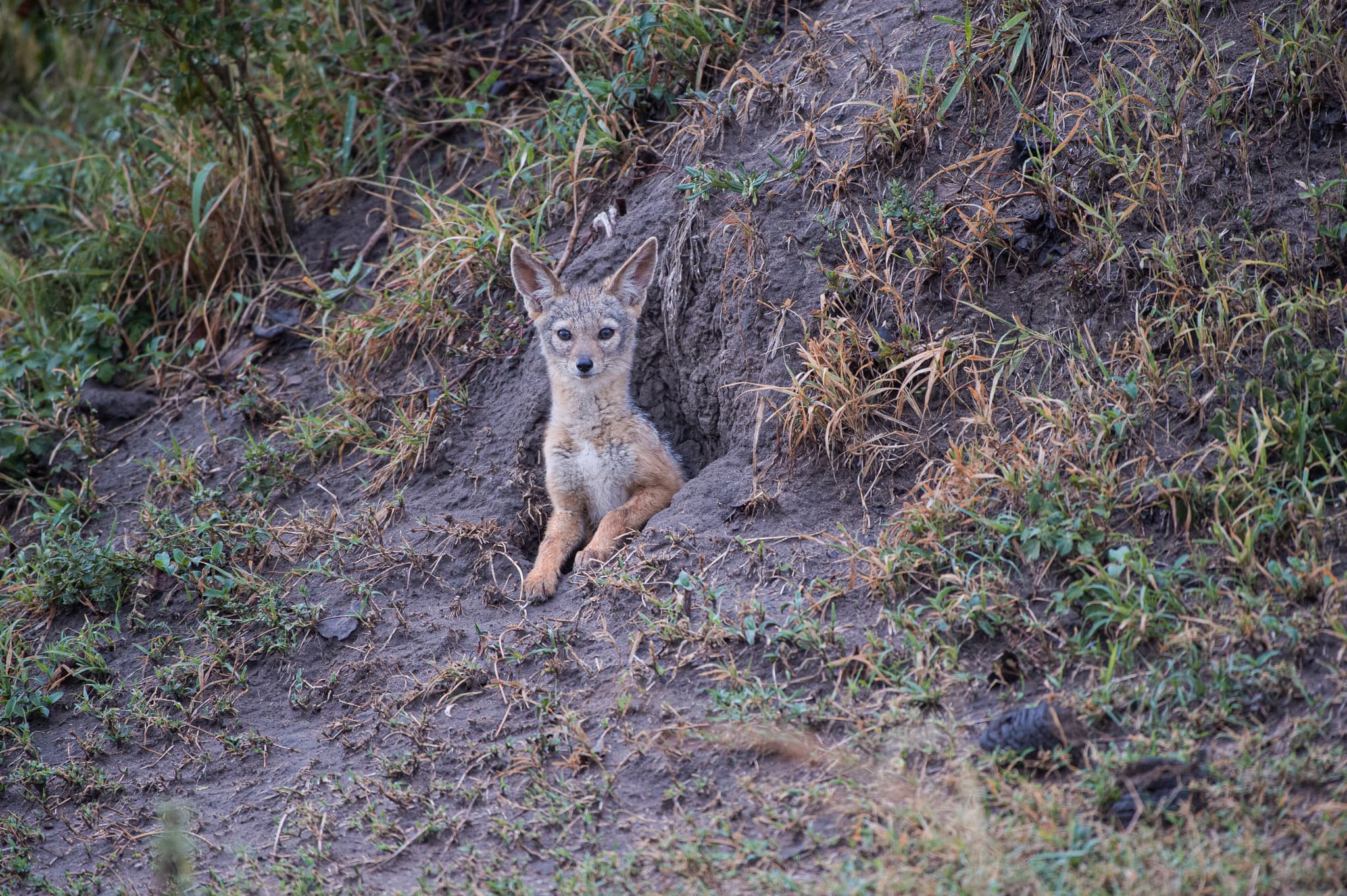
Black-backed jackal pup at the entrance of an earthen den

Small predator, tight family bonds

Black-backed jackal

Lupulella mesomelas

While lions own the posters, jackals thread through the same landscape almost unnoticed—until a pup sits up at a den mouth like this one, ears tall, watching the world sharpen into focus.

Pairs are famously loyal; young from an earlier year sometimes stay to help feed the next litter. The den is more than a hole in the ground—it is shelter from hyenas and leopards, and a classroom where the savannah’s finer details are learned one scent at a time.

  • The dark “saddle” on the back gives the species its English name.
  • Omnivorous and opportunistic: insects, fruit, small mammals, and carrion all go on the menu.
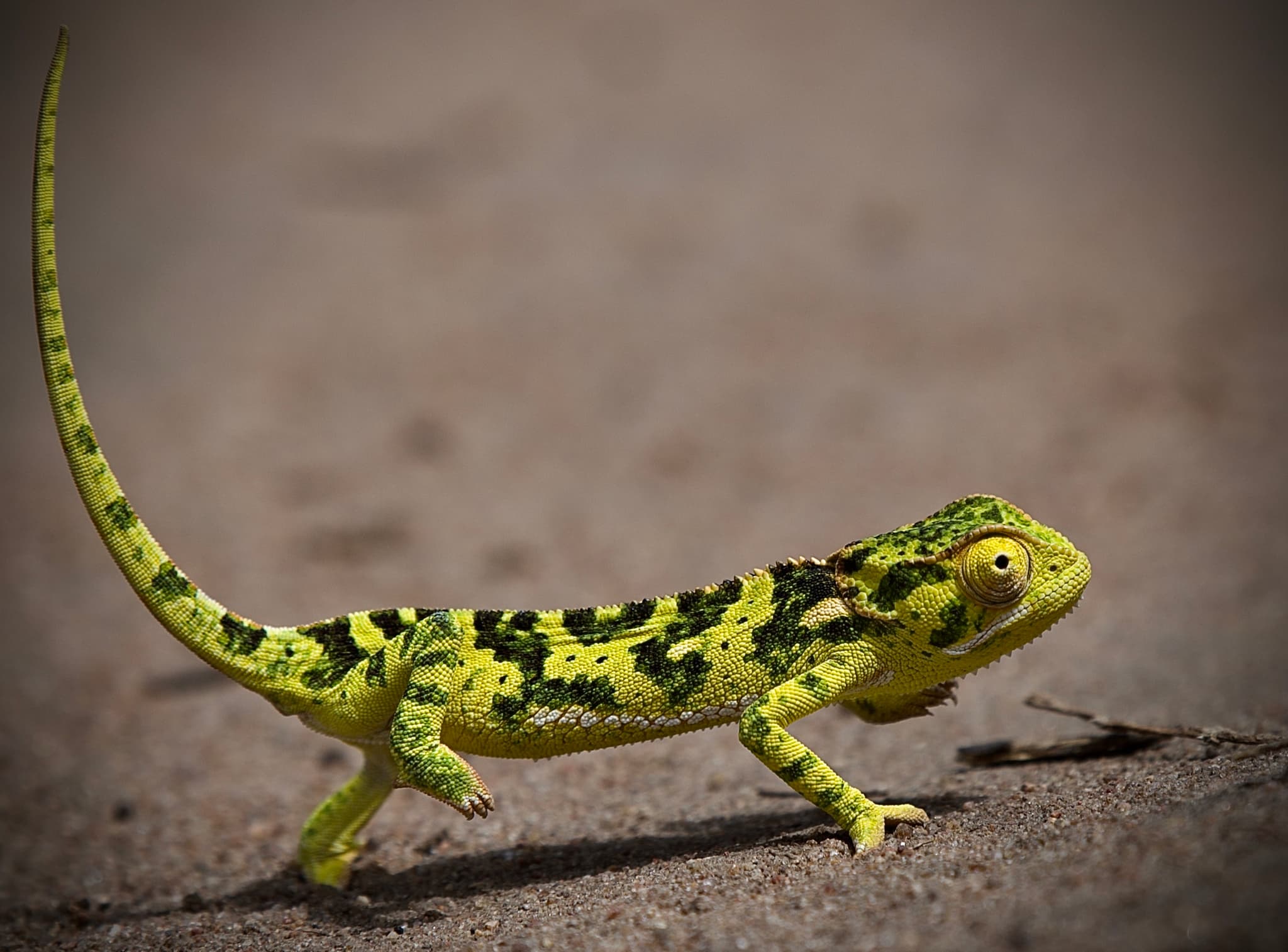
Flap-necked chameleon crossing sandy ground, tail curled

Slow steps, ancient design

Flap-necked chameleon

Chamaeleo dilepis

Green as a leaf until it isn’t—chameleons trade in patience. Eyes swivel on their own, scanning for flies while the body rocks forward in that hypnotic, stop-start walk that pretends to be wind on a branch.

This is not a mammal moment; it is a reminder that the Mara–Samburu belt holds whole other languages of survival. Given a reason, it can flash contrast; given time, it simply disappears against stem and shadow.

  • Long, ballistic tongue—sticky pad at the tip—can nab prey in fractions of a second.
  • Widespread across much of sub-Saharan Africa in savannah and woodland margins.
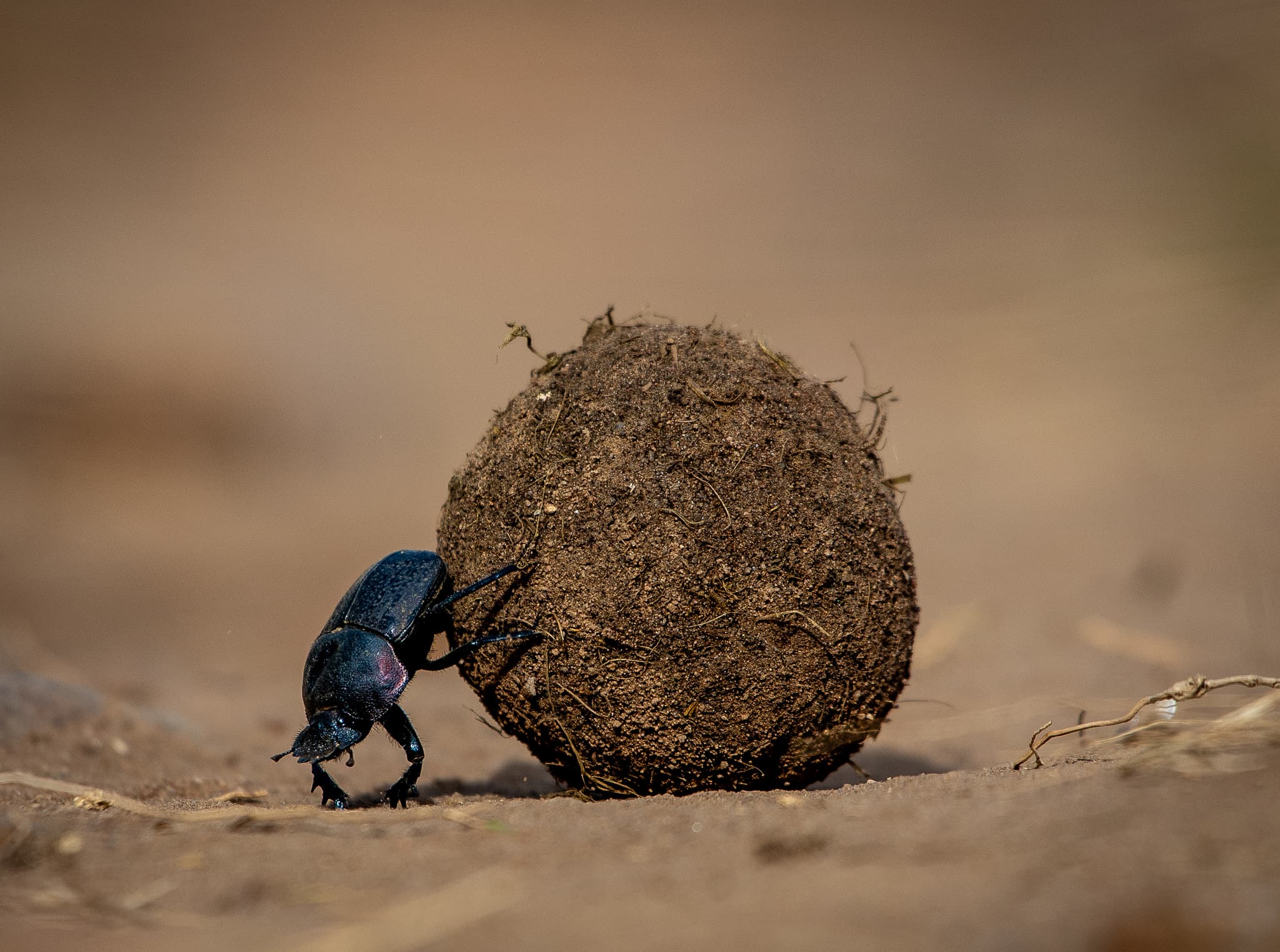
Dung beetle pushing a large round ball of dung across dry sandy savanna in bright sun

Strength in miniature

Dung beetle

Scarabaeinae (ball-rolling scarabs)

Safari tends to train the eye on megafauna, yet the ground has its own celebrities. Ball-rolling scarabs shape waste into spheres many times their weight, then steer them with hind legs in a patient, stubborn parade across bare soil.

This frame is all scale and grit: sun on a dark, iridescent shell, texture on the ball, and a soft wash of savanna behind—proof that nutrient cycling and theatre happen at ankle height, too.

  • Many species bury dung for food or brood chambers—an ecological cleanup crew on the plains.
  • Pairs or rivals sometimes contest a ball; the behaviour is as dramatic as any crossing—just easier to miss from the vehicle.

Chat with us

Have questions? Message us on WhatsApp—we reply as soon as we can.

Start conversation